
Luke Littler’s Tears at the 02: The Emotional Cost Behind His Premier League Triumph
Luke Littler’s Tears at the 02: The Emotional Cost Behind His Premier League Triumph
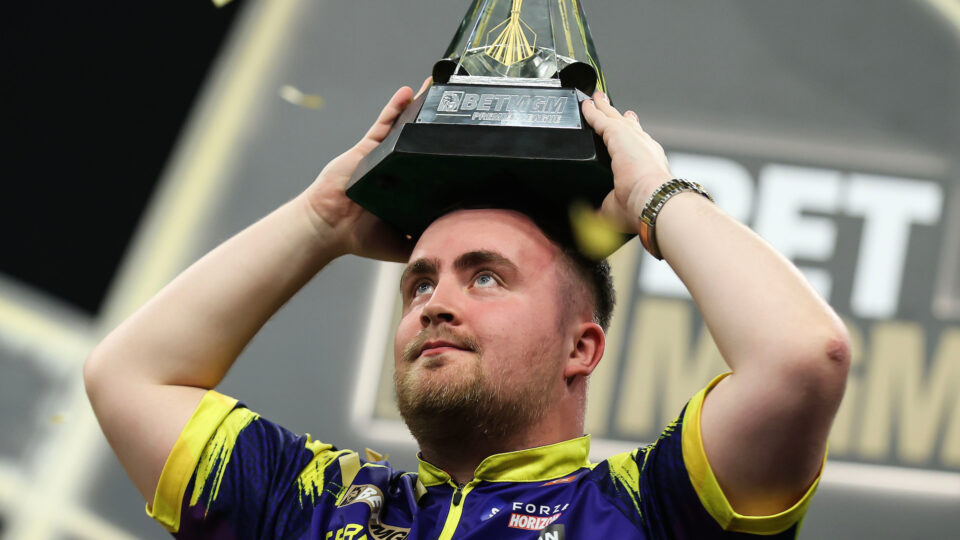
When Luke Littler pinned double top to regain his Premier League title, there was no roar of triumph and no theatrical celebration.
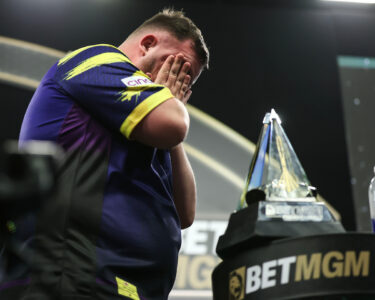
Instead, the world number one folded over the oche, buried his face in his hands and cried.
In an unforgettable 11-10 deciding-leg victory over Luke Humphries at London’s O2 Arena, Littler collected another major title and another sizeable payday. Yet the defining image of Finals Night was not the trophy lift or the winning dart. It was the sight of a teenager finally allowing the emotion of the past four months to surface.
For the last 17 weeks, we have become accustomed to treating Luke Littler as a darts machine. On Thursday night, we were reminded that behind the record-breaking averages and remarkable consistency is a young man still learning how to navigate a level of fame and scrutiny few sportspeople have experienced at his age.
The Weight of the Spotlight
Since bursting onto the scene, Littler has occupied a unique position in British sport.
The British media has treated Littler with a frantic, intense duality. The same red-top tabloids that paint him as a national hero back pages often devote equal attention to his personal life, relationships and lifestyle choices. Every result is analysed. Every interview is dissected. Every perceived dip in form becomes a talking point.
When Littler endured a difficult start to the Premier League campaign, the reaction was swift. After four weeks, he found himself rooted to the foot of the table following a disappointing night in Brighton, where he averaged just 79.
Questions were raised about whether opponents had begun to work him out. Social media criticism intensified. Crowds that had once embraced him as the sport’s newest star became increasingly hostile. From persistent whistling in Manchester to vocal opposition in Rotterdam, the atmosphere often felt markedly different to the adoration that greeted him during his breakthrough. Because he can hit a 180 on command, the public often forgets that a 19-year-old is absorbing the opinions of millions of grown adults on live television.
Yet from that difficult opening month, Littler responded in the only way elite athletes can. He fought back to finish top of the league phase before ultimately lifting the trophy for a second time
What happened after the final dart suggested that the journey had taken a greater toll than many realised.
Speaking after his victory, Littler admitted there were moments when the weekly scrutiny became overwhelming.
“After Brighton and the incident in Manchester, I was sat at home saying to Faith, ‘I don’t want to do it anymore, just the crowd every week.’ I said to her, ‘I’m down bad.'”
For perhaps the first time since his rise to prominence, the public received an unfiltered glimpse into the pressures that accompany life as darts’ biggest attraction.
A Normal Teenager in an Extraordinary Situation
Part of Littler’s appeal has always been how ordinary he appears despite his extraordinary talent.
At an age when many young people are learning to drive, spending evenings gaming with friends or taking their first steps into adulthood, Littler spends his Thursday nights performing in front of television audiences of millions and packed arenas across Europe.
The media is often quick to highlight the habits that attract criticism, the Xbox sessions or his late-night takeaways, but those aren’t signs of a lack of discipline, they are a young man’s desperate grip on the real world, fiercely protected by the family surrounding him. Less a sign of immaturity and more an attempt to preserve some sense of normality.
The reality of Premier League darts is rarely visible to those watching from home. Seventeen consecutive weeks of travel, hotels, media commitments and public appearances create a relentless schedule. Add the expectation of being the sport’s biggest draw and the challenge becomes even greater.
For a teenager still adapting to global fame, that burden is significant.
The Inner Circle: A Fortress behind the Oche
To the outside world looking in, Littler’s meteoric rise looks like a solo act on the big stage. But behind the scenes, his survival in this pressure cooker is entirely anchored by an elite support system.
Unlike many young prodigies who are thrown into the traveling circus of professional sports alone, Littler’s defensive shield is visible at every single venue. His parents and his partner, Faith, are permanent fixtures in the player’s lounge and the front rows, traveling thousands of miles every week to ensure he has a sanctuary away from the noise.
When the arena lights dim and the toxic social media feeds start spinning, it is this tight-knit family unit that keeps him grounded. They aren’t just there to celebrate the wins; they are there to manage the exhaustion, handle off-board distractions, and provide a vital slice of normal teenage life in a world that is anything but normal. Without that constant, unwavering presence on the road, sustaining this level of performance on the PDC tour would be humanly impossible.
Luke Littler: Criticism Versus Scrutiny
None of this is to suggest that Littler should be immune from criticism.
Elite sport has always brought scrutiny, and with success comes expectation. Performances should be analysed. Results should be debated. That is part of professional sport.
The distinction lies between assessing performances and forgetting the humanity of the person delivering them.
Too often, athletes become characters rather than people. We watch them respond to adversity and assume they are unaffected by it. We see them produce brilliance under pressure and conclude that pressure no longer exists.
Littler’s tears served as a reminder that neither assumption is true.
The Breaking of the Dam
In his post-match press conference, Littler delivered perhaps the most important quote of the evening.
“We’ve all got feelings, not just as dart players. We’re just humans. We just want to get on with our lives.”
His great rival Luke Humphries immediately understood the significance of the moment. Despite his own disappointment, the former world champion embraced a visibly emotional Littler on stage as the magnitude of the occasion became clear.
It was a gesture that spoke to a truth sometimes forgotten amid the noise surrounding professional sport: achievement and vulnerability are not opposites. Often, they exist side by side.
As broadcaster Laura Woods observed in the aftermath, “We build them up, we shoot them down.”
More Than a Trophy
Ultimately, Luke Littler’s Premier League title will be remembered for more than the statistics.
It will be remembered for the quality of the final, for the remarkable standard produced by two of the best players in the world and for a deciding-leg finish worthy of the occasion.
But it may also be remembered as the night the public saw beyond the averages, the titles and the hype.
The tears at the O2 were not those of a player overwhelmed by victory alone. They were the release of four months spent carrying expectation, criticism, pressure and responsibility.
Luke Littler walked away from the Premier League stage with another trophy in his hands.
For a brief moment afterwards, he reminded everyone watching that he is also human.

